The broader markets closed in tandem with their large counter parts- BSE Midcap and Smallcap indices lost 0.065 and 0.10%, each.

ITC was the biggest gainer in the Sensex pack, rallying 3.14 per cent. Maruti Suzuki, Axis Bank, Hero MotoCorp, Vedanta, Asian Paints, M&M, HUL, Bajaj Auto and PowerGrid were among the other top gainers, rising up to 2.13 per cent.

Recovery in bluechips and gains in European markets helped the rally.

The broader NSE Nifty, on the other hand, ended 2.70 points, or 0.02 per cent, lower at 11,555.90 in its third straight day of losses.

Yes Bank, Wipro, Kotak Bank, M&M, Sun Pharma, Maruti, HDFC, Hero MotoCorp, Infosys, TCS, L&T, Bajaj Auto and HUL were among the top gainers, rising up to 6 per cent.
The Nifty too closed lower by 80.75 points, or 0.73 per cent, at 11,049.65 after hitting a low of 11,033.90.

Less-than-expected rainfall and a poor spatial distribution, experts say, can rekindle fears of a rise in food and fuel inflation that can have an impact on the RBI's monetary policy. The fear of less than optimal rainfall due to El Nino this year, analysts believe, is the biggest short-term risk for the markets, which they said has not been fully priced in yet by them. Monsoon set over Kerala on June 08, a week later than its scheduled date.

Asian Paints dropped the most by 1.33 per cent. IndusInd bank fell 1.2 per cent, Axis Bank by 1.19 per cent, SBI by 1.12 per cent, Bajaj Finance by 1.07 per cent, Nestle by 1.04 per cent, and TCS by 0.97 per cent. Hindustan Unilever, Reliance Industries, Power Grid and Kotak Bank also retreated. Maruti Suzuki was the lead gainer, rising by 2.22 per cent.

The winter session of Parliament will commence on November 26.

The rupee plunged 61 paise to decline below the 83-mark for the first time against the US dollar on Wednesday amid unabated foreign capital outflows and a strong dollar in the overseas markets.
The 50-share NSE Nifty closed lower by 19.25 points, or 0.19 per cent at 10,121.90

The 30-share BSE index reclaimed the 30,000-mark to trade at a new record high of 30,071.61 by surging 128.37 points, or 0.42 per cent. This surpassed the previous record high of 30,024.74 (intra-day) that the Sensex touched on March 4, 2015.
Late selling in realty, PSU and infrastructure stocks mainly dragged the market from early highs.

Banking stocks led by Yes Bank, ICICI Bank, Axis Bank and SBI came under heavy selling pressure

Sensex lost 184 points to trade at 23,878 and the Nifty has dropped 55 points to quote at 7,254.

Market breadth depicted gains with 1,476 advances over 1,403 declines on the BSE. 140 stocks remained unchanged.

The broader NSE Nifty also settled lower by 23.10 points, or 0.19 per cent, at 11,922.80.

The broader NSE Nifty ended 57 points, or 0.49 per cent, lower at 11,498.90 in its fourth straight day of losses.

Following the exit poll prediction of a resounding BJP victory, BSE benchmark Sensex shot up on Monday by 2,507 points or 3.4 percent to settle at a new closing peak of 76,469. However, a day later on Tuesday, the equity markets witnessed a bloodbath, with the Sensex tanking 4,390 points or 6 percent to settle at 72,079. This was the worst single-day fall in four years.
The NSE Nifty, however, ended a shade higher by 6.65 points or 0.06 per cent at 10,442.20

Sun Pharma was the top gainer after SPARC received Sebi nod to raise up to Rs.250 crore through a rights issue

JSW Steel (3.37 per cent), Tata Steel (3.33 per cent), Maruti (3.24 per cent), Power Grid (3.07 per cent), IndusInd Bank (2.95 per cent), Bajaj Finance (2.12 per cent) and Tech Mahindra (2.22 per cent) were among major gainers. On the other hand, Ultratech Cement, Sun Pharma, Nestle and L&T were the losers.
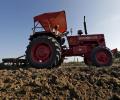
After a stellar run on the bourses that saw tractor stocks rise up to 52 per cent, analysts are turning cautious on the sector as muted demand trends may weigh in the near-term. Total volumes in the tractor segment for the last three quarters of the current financial year (9MFY24) have remained weak with VST Tillers, Escorts Kubota, and M&M seeing declines of 21 per cent, 5 per cent, and 3 per cent year-on-year (Y-o-Y), respectively, during the period, amid patchy rainfall, delayed crop harvest, and lower reservoir level. Across industry, total domestic sales volume so far in the current financial year (April '23 to January '24) has declined 5 per cent Y-o-Y, as per Tractor Manufacturers Association (TMA).

The S&P BSE Sensex dropped 1 points to end at 26,396 and the Nifty50 slipped 2 points to end at 8,109.

The broader NSE Nifty, in a volatile session, recaptured the key 11,300-mark. It ended at 11,369.90, up 82.40 points or 0.73 per cent.

The S&P BSE Midcap and the S&P BSE Smallcap indices under-performed to lose 0.8% and 1.6%

The broader Nifty finished at 10,421.40, up 194.55 points, or 1.90 per cent.

Public-sector enterprise stocks have seen a good run thus far in 2023-24 (FY24), with the S&P BSE PSU Index surging by over 26 per cent during the period, compared to an 11 per cent increase in the benchmark S&P BSE Sensex.

Financials were among the top losers along with Sun Pharma and index heavyweight Reliance Industries
FMCG major ITC and private banking major ICICI Bank were the top Sensex losers

Shareholders of industry giants Adani Enterprises, Reliance Industries, and Tata Motors - the latter two are part of the Sensex - will decide on combined related-party transactions of more than Rs 2.68 trillion proposed for this financial year and later. Related-party transactions for BSE 500 companies touched at least a six-year high of Rs 42.1 trillion in FY23, the Capitaline data shows. The Rs 42.1 trillion includes related-party transactions both at balance-sheet and profit-and-loss levels.

The broader NSE Nifty shuttled between 10,784.65 and 10,689.80, before ending 21.30 points, or 0.20 per cent, lower at 10,718.05.

'Investors need to be stock specific and should not rush to buy stocks at the current levels.'

Among Sensex stocks, SBI, IndusInd Bank, HDFC Bank, Axis Bank, HDFC, Tech Mahindra, ICICI Bank, Ultratech Cement, L&T, Bajaj Finserv, Reliance, HCL Tech, Asian Paints, Wipro and M&M were the major losers. On the other hand, HUL advanced the most by 1.14 per cent. Maruti, Tata Steel, NTPC and Sun Pharma also posted gains.

Nifty ends above 8,600; Tata Motors, RIL top leaders

Macroeconomic data announcements, the Covid situation in China and global market cues would guide Dalal Street in the first week of trading in the New Year, analysts said. Markets would also keep a track on rupee movement, Brent crude oil prices and foreign fund investment trends. "As market players attempt to understand the Fed's stance, Indian markets may respond in lockstep with their international counterparts when the Federal Open Market Committee (FOMC) minutes are made public later this week.

Small stocks of Dalal Street grappled with turbulent times in 2022 as high volatility and higher interest rate regime sapped investors' appetite for these scrips but the horizon ahead seems less cloudy for the New Year. While the 30-share Sensex scaled multiple record peaks with bluechips glittering, small stocks underperformed and the BSE smallcap index declined more than 3 per cent this year. In comparison, the BSE Sensex climbed 2,673.61 points or 4.58 per cent till December 27.
Tata Motors (down 1.7%) was the top loser on Sensex and Nifty, while Lupin (1.6%) gained the most.
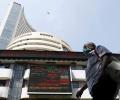
The market capitalisation of BSE-listed companies on Thursday crossed the historic Rs 200 lakh crore mark for the first time, driven by a continuous rally in the broader market. Riding high on the bullish investor sentiment, the market capitalisation of BSE-listed companies reached a record Rs 2,00,47,191.31 crore at close of trade. The 30-share BSE index closed the day with a gain of 358.54 points or 0.71 per cent at its lifetime peak of 50,614.29. This is the fourth consecutive day of gains for the markets.

ICICI Bank, HUL, HDFC Bank, M&M, Ultra Cement, IndusInd Bank and Tech Mahindra were among the losers in the Sensex pack. NSE Nifty slipped 13.95 points to 17,355.30.
